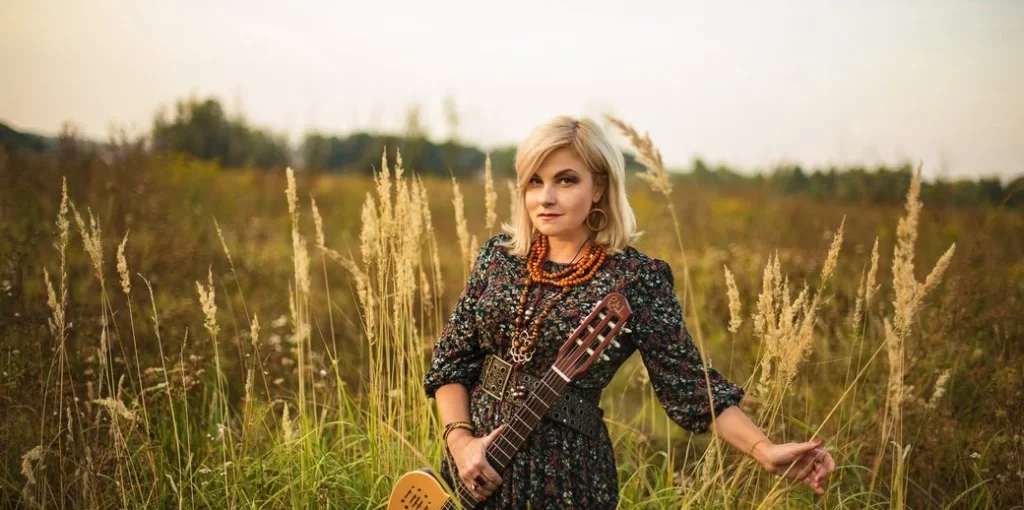
Maria Burmaka is Ukrainian singer with a rich history of protest involvement. At the time of the Revolution on Granite, Burmaka was attending Kharkiv University and was more of a student than a singer at the time. She began to feel she was part of the student protest movement after singing at the Chervona Ruta Festival and decided to come to Kyiv. She later returned back to Kharkiv to encourage students there to join the protest movement. The university authorities, which Burmaka described as worried and Soviet-minded, tried to talk her out of inciting protest, but she persisted nonetheless.
Burmaka is a Kharkiv native and championed Ukrainian language there before it was fashionable. Kharkiv is in a region of Ukraine where Russian culture and people are more dominant and prior to Ukrainian independence people were called “bourgeois nationalists” for speaking Ukrainian. Burmaka was encouraged by her parents to speak Ukrainian to assert the existence of Ukrainians in the region and she is one of the only Ukrainian singers who has only ever sung in Ukrainian. Kharkiv now embraces Ukrainian language and culture much more, which brings Burmaka joy on the occasions she does visit.
Burmaka participated and performed in both the Orange Revolution and the Revolution of Dignity. She describes the Orange Revolution as “more like a festival”. People could feel that they had gained more freedoms since the last revolution on the maidan and everyone came together in music. The Revolution of Dignity was much darker and had bloodshed, and Burkmaka describes her experience as such.
Burmaka’s musical career has also been greatly successful. She has toured internationally, including a north american tour called, “Songs and Stories of the Orange Revolution” and many charity concerts. She moved to Kyiv in 1992 for her music career. In Kyiv, Burmaka released over ten albums, many singles, and started her family. In 2009 she was honored as “People’s Artist of Ukraine”. Her career also extends into television and journalism.